What is it?
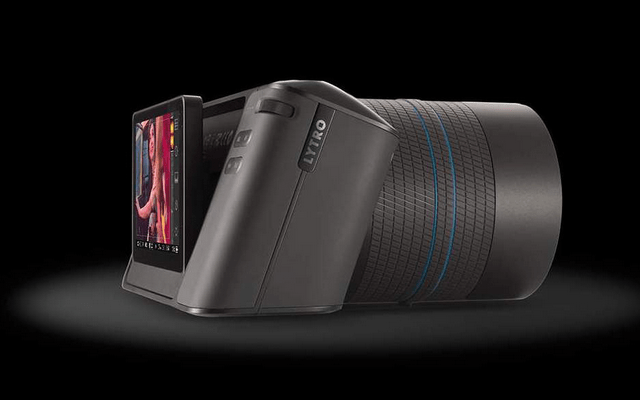
The Lytro Illum (alongside their eponymous first generation camera) are best understood as the first iterations of presenting plenscopic imaging to consumer photographers. In plain English, Lytro have created two “light-field” cameras – these (unlike traditional cameras) capture light information for the whole focal plane within an image, rather than a single focus point.
In plain-er English this means that users are able to interact with the images captured photographically they have captured in a number of ways previously not possible – including “refocusing” an image after it has been captured, as well as shifting the perspective. As such, Lytro living images, are also unique at a technical level and require their own web player to view.
These cameras were covered in my very first entry to this blog which can be read here.
In this post however I mentioned that one of the most problematic aspects of Lytro technology, was not the clearly compelling features they offered, but rather how they fit into current image-sharing practices (today characterised by online social media sharing) both as a technology and a practice.
As of June 2014, Lytro switched from a proprietary web plugin to one that runs on OpenGL. This largely has the effect of allowing Lytro images to become more ubiquitous online (as well as making it easier for web developers to integrate Lytro living images on websites).
In addition to this change, Canadian image-sharing website 500px has taken a progressive stance by integrating the plugin on their website.
Why is it important?
Light-field photography challenges many aspects of photography as it exists today. There is largely no precedent within contemporary imaging if viewed as a system of 6 basic attributes (culture, processes, people, goals, technology and infrastructure) for the technology. Neither does Lytro appear to coalesce with the natural progression of typical trends in consumer photography as we experience it today.
The latter two of these six aspects has been addressed by the Lytro camera itself [technology], as well as opening the web player to an open-source standard allowing Lytro images to start to become more ubiquitous online [infrastructure].
However there is some way to go for it to gain traction as a socio-technical system in its own right.
People don’t know what constitutes good light field photography, because there has been no culture of use and appraisal yet [culture]. If adjudged by the existing standards and values of photography – the output of the camera appears strange. Typically emphasis in photography is placed on image-quality and the keen eye of the photographer top spot the shot. In comparison to the lay-person Lytro appears to permit indiscriminate use (take now focus later), even though this is not the case as depth of field must be taken into account to produce the most pleasing use of the technology [process].
Similarly they are unsure of how the role of a light-field photographer should differ or be treated similar to that of a normal photographer [people]. People also do not yet know what constitutes a good or bad Lytro image at a technical level – they can only hazard a guess at those they encounter online or make through use (goals). Photography is an activity that is strongly based around mastery/expertise which causes this to be problematic.
Thus, at the consumer level at least the technology currently comes across as a curiosity/ “look at the future” rather than a solution to a defined or existing problem.
This is especially so as most people do not understand these variables in relation to traditional photography – and may not even have a point of reference to work from. The Illum however represents a step in the right direction in this respect by putting the technology in the hands of enthusiasts who will decipher and present to others the best uses for the technology. In addition through partnering with 500px, Lytro have found a suitable place for these images to reach a discerning audience.
This is a series of issues for Lytro to overcome in their journey – but ones which I am sure they will do as the technology surely represents an undeniable potential for many (including the consumer space) in the coming years.
How might it affect the Social Camera?
Technological innovation alone is no longer enough, technological paradigms
The original Lytro camera and the Illum are both unmatched as technological innovations within the area of contemporary digital imaging.
Other companies within imaging are spending a lot of money innovating upon current technologies such as curved sensors, and mirrorless cameras – yet only these represent only improvements upon existing technology.
These innovations offer users clear and understandable advantages over existing technologies – and thus a clear refinement pathway for digital imaging technology moving forwards. (This is also important for manufacturers who do not have to completely change the products that their factories produce). Indeed, if the qualities of curved sensors and mirrorless cameras become popular with users – the other manufacturers find themselves having to provide analogous technology. He who innovated first has the head-start on the rest – and becomes the market leader. This becomes even more difficult when intellectual property is factored into the equation).
Importantly the demand for these refinements are a consequence of progressing the existing paradigm of photography.
What plenscopic imaging is, is not a continuation or pivot upon existing technological hierarchies, but rather the proposition of a completely tangential and ultimately new technological paradigm – and herein lies the problem/ task at hand.
Whilst the technology is clearly compelling – it cannot exist within a vacuum and has to be enacted within the present cultural circumstances (and potentially in spite of a systematically entrenched precedent.) That is if the device describes itself as a camera – or as a device that should be used as such.
However there will surely be a turning point where the clear benefits offered by the technology become viable for wider adoption by the public. Personally I believe that the technology will find its best uses outside of the consumer space before this occurs. More soon…
Apologies for the sloppy writing on this one – wanted to get the ideas down in their rawest form. I will look to refine this entry soon! Needless to say light-field photography represents a future for photography – and as such it’s progress is something that I will be keeping a keen eye upon.
What do you think though? Leave a comment or start a conversation with me on Twitter at @mdhendry
 Martin Douglas Hendry
Leave a comment